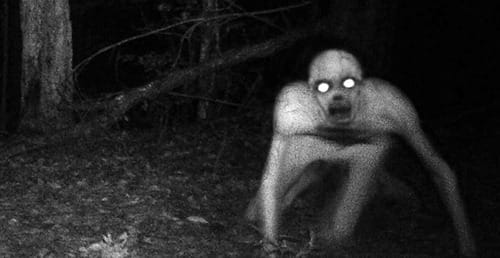
In the darkness of night in remote parts of South Sulawesi, the sounds of wild animals sometimes cease for a moment—as if making room for something more terrifying. Many residents of ancient villages believe that when the night falls silent and a sudden chill envelops the body, it is a sign that the Parakang are on the prowl.
The Parakang are not just bedtime stories, but rather part of Bugis mystical lore, steeped in mystery. Legend has it that they are ordinary humans who mastered black magic but failed to control it. As a result, they become werewolves, haunted by the desire to prey.
Legend has it that the Parakang are humans who master ancient spiritual knowledge for power or immortality. However, if the possessor of the knowledge fails to fulfill certain requirements or breaks a taboo, they will transform into a Parakang. The Parakang are believed to have slightly red noses, sharp eyes, disheveled hair, and a distinctive odor. The Parakang ghost is considered dangerous because it can prey on humans, especially babies and children.
These creatures live among humans, disguised as ordinary people, but actually carry a curse that makes them hungry for human blood and organs. “The Parakang can be anyone—a neighbor, a friend, even a family member,” said Haji Andi, a traditional elder in Bone Regency. “They can’t be recognized unless we know the signs.”
According to belief, there are three distinctive signs of the Parakang:
Avoiding eye contact: The Parakang never dares to look directly at others.
Strange movements: At night, they often walk with a limp, as if avoiding something unseen.
Strange transformations: The Parakang can transform into animals such as a black chicken, a dog, or even a ball of fire floating in the air.
Stories about the Parakang are often passed down by word of mouth. One famous story concerns an incident in a village in Gowa Regency, South Sulawesi. Several years ago, a middle-aged woman named Tanga became a topic of conversation after her behavior drastically changed. She was often seen walking alone at night, aimlessly.
One night, a young villager saw a small red light drifting from Tanga’s house toward the forest. “We thought it was a kerosene lamp or a campfire,” said the young man, who asked to remain anonymous. “But as we approached, the light suddenly disappeared, and we heard footsteps receding.”
Shortly afterward, livestock in the village were found dead with suspicious wounds, as if something had sucked their blood. Residents began to suspect that Tanga was a Parakang. According to tradition, a ritual is used to exorcise the Parakang. A shaman is called to perform a pasang (a spell to summon and paralyze the Parakang). During the ritual, Tanga’s body convulsed, and she confessed that she was indeed cursed.