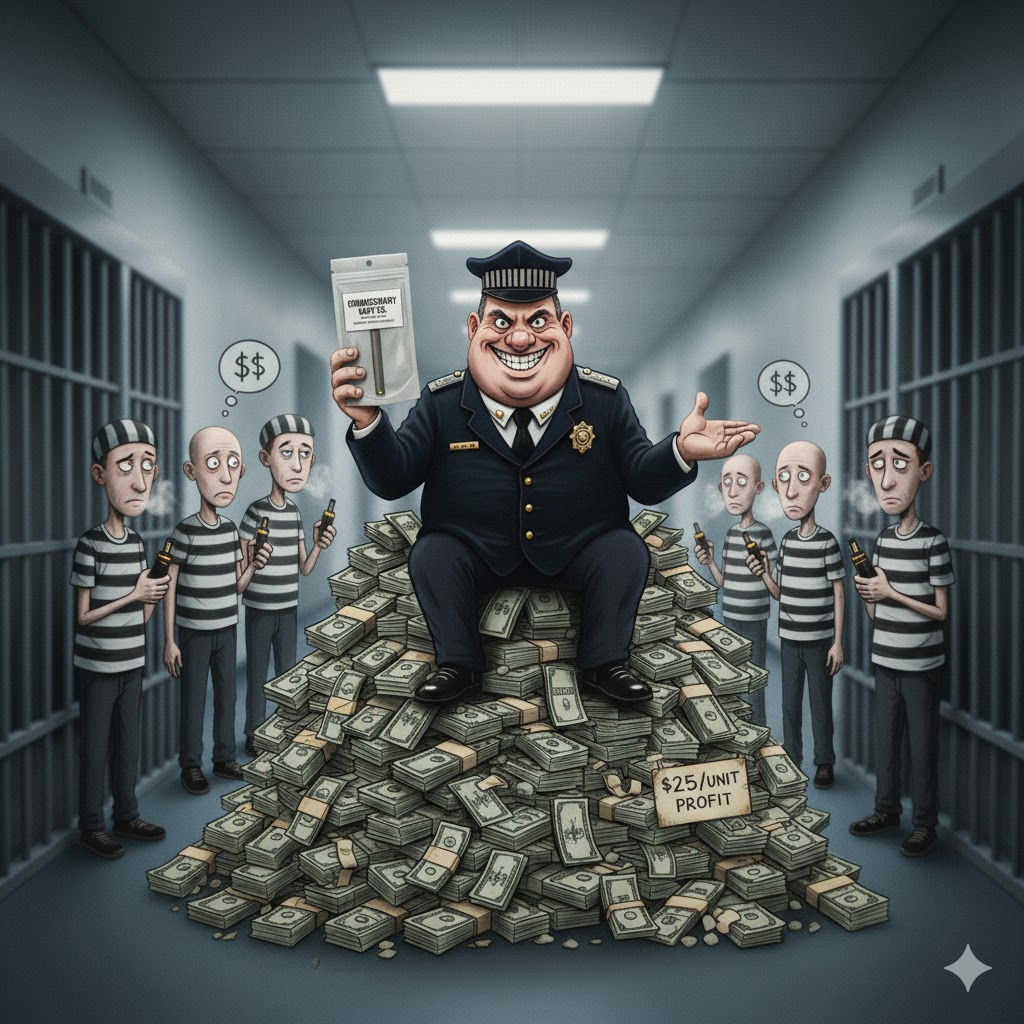
I. The Hook: Prison Vaping is a Cash Cow Charging A 700% Mark-up 
Forget crypto—the real money maker in the US is selling vapes to incarcerated people. In 2025, the correctional vape market is big business that makes massive profit. 
Many local jails and state prisons have figured out how to use vapes (Electronic Nicotine Delivery Systems, or ENDS) as a massive money-maker, generating revenue to pay for staff and programs for those doing time. We’re talking about crazy markups that often soar over 700% above what the prison pays. 

But Big Brother is watching and stepping in…  2025 brought a serious federal crackdown led by the US Food and Drug Administration (FDA) and the Department of Justice (DOJ) targeting illegal imports. We’re seeing record-breaking seizure operations, including a haul of unauthorized vapes worth $86.5 million in Chicago in September 2025.
The problem? This institutional greed defeats the entire public health point. When vapes are priced this high, addicted inmates can’t afford the legal products, which just keeps the dangerous, high-risk black market that goes on inside thriving instead.
I I. Shady Economics: The Entire System Is Built On Financial Exploitation Of A Captive Market
A. Prices, Profit, and the Markup Shock
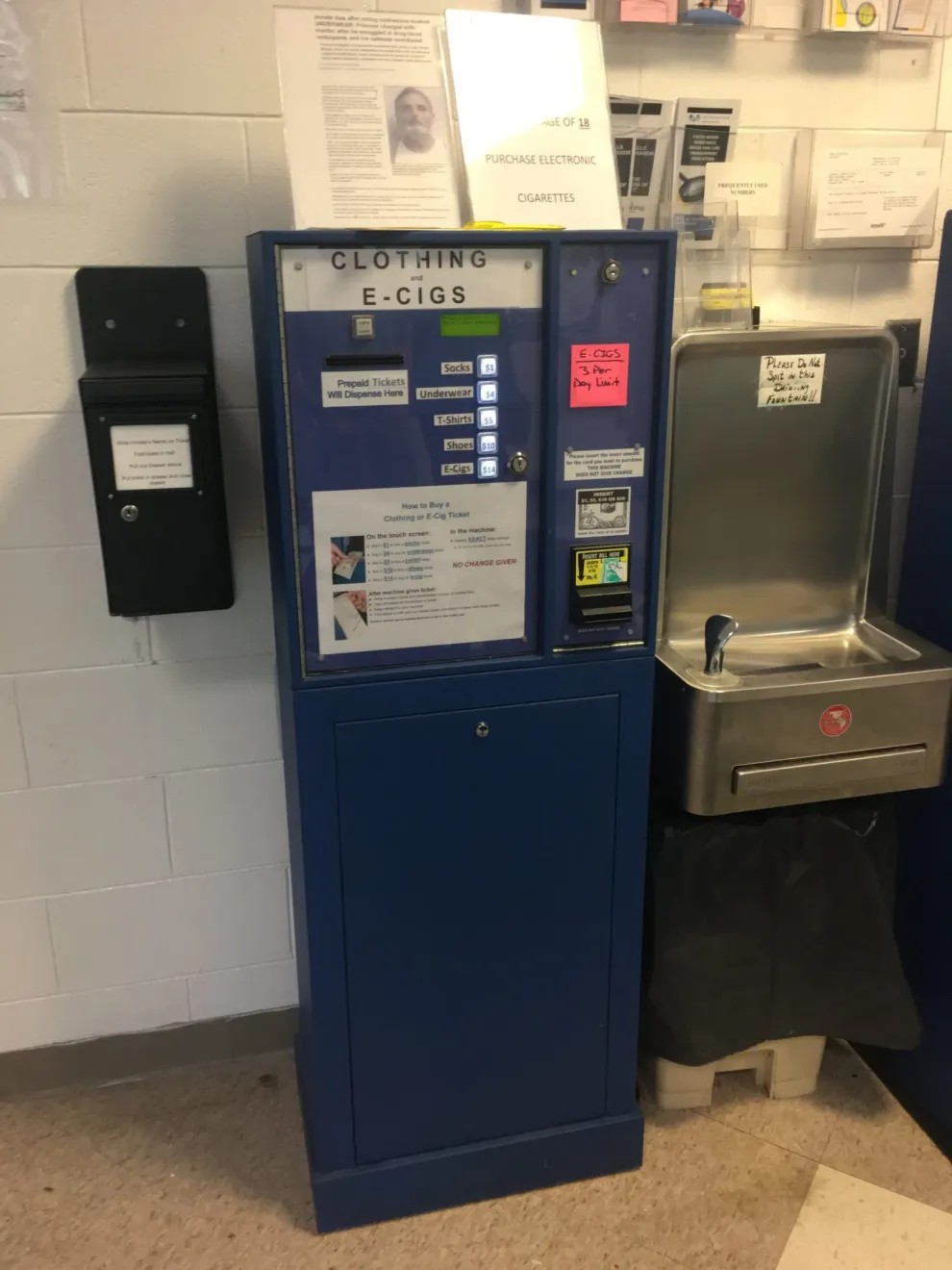
In states where vapes are sold to inmates on commissary (like Pennsylvania and Illinois ), the prices charged to inmates are dramatically inflated. Kentucky jails are one of the 1st pioneers, making over $1.3 million in profit in 2018 by reselling vapes at triple or quadruple their wholesale cost. 

-
The Commissary Price: In the Pennsylvania prison system, an e-cigarette is sold for $5.37 plus tax.
-
The Markup: Nationwide, reports suggest these institutional markups exceed 700%.
When institutions impose a 700%+ markup, they are exploiting the addiction for budget support rather than offering genuine, affordable harm reduction.
III. “Prison-Proof” Vape Technology
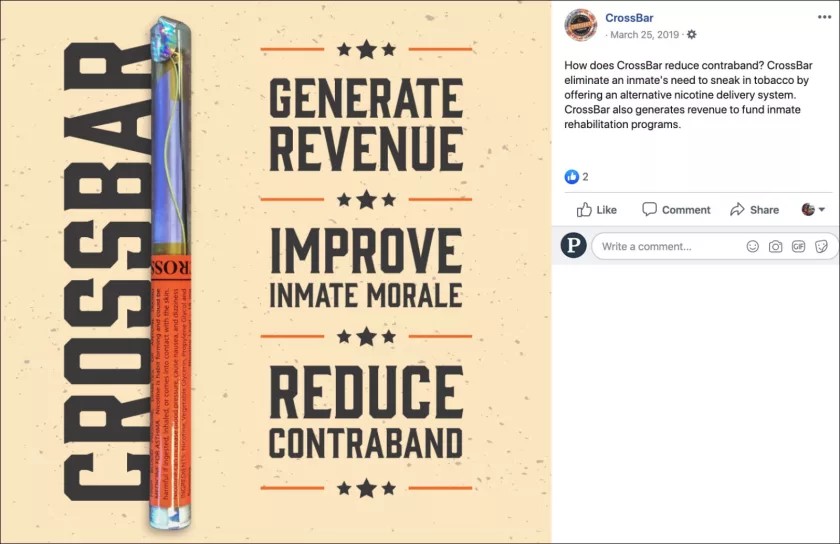
If you thought your very 1st vape was basic, meet these specialized products made exclusively for correctional facilities. There are a few different brands that are specifically made for inmates; Jail Puff, eCig For Inmate, but the industry leader is the CrossBar Electronic Cigarette , a brand recognized nationwide and protected by a US Patent. Specialization is crucial because normal retail vapes are way too easy to turn into shanks or can become fire hazards. 


These vapes are specifically engineered to survive prison:
-
Anti-Weaponization: The casing is made of one-piece soft plastic that bends, stopping inmates from sharpening it into a shank.
-
Self-Destruct Mode: If someone tries to force the device open, the internal circuit board is designed to fracture, immediately destroying the device and making it unusable.
-
Ultra-Low Profile: It uses an ultra-low voltage battery (anti-fire
 ) and the e-liquid formula is adjusted to significantly reduce the vapor. This low-aerosol output is key to stop sensitive smoke detectors from being triggered in cells.

IV. The 2025 Regulatory Mess: The Vape Apocalypse
Even a perfectly secure vape can now get a prison in massive trouble due to new laws: 
The FDA/DOJ joint task force is aggressively pursuing products that lack mandatory federal authorization.
Effective September 1, 2025 a sweeping law bans the sale or marketing of vapes made in China** or other “foreign adversary” countries.
Correctional facilities are now scrambling. Their stock must be both prison-secure and legally compliant with the new state certification directories launching in October 2025.
The difficulty of meeting both the special prison security requirements and these strict new regulatory checks reinforces the market dominance of a small, specialized vendor pool. This lack of competition helps keep the prices astronomically high.

V. The Verdict: Is Jail Vaping a Good Look?
Experts and administrators are split. The policies attempt to balance health, control and cash flow.
A. The Benefits (Pros) 
| The Good News | The Deets |
|---|---|
| Harm Reduction | Vaping is significantly less harmful than combustible tobacco, offering a better option for heavily addicted inmates. |
| Operational Stability | Providing a nicotine alternative reduces conflicts and improves inmate morale. |
| Staff Control | Officers explicitly use the ability to buy and use vapes as a “privilege” to maintain control and punish those who “misbehave”. |
B. The Risks (Cons) 
| The Bad News | The Deets |
|---|---|
| Health Unknowns | Vapes still contain toxicants and nicotine; long-term data is insufficient, posing unknown risks. |
| Secondhand Exposure | Vapes still pollute the air. In crowded prison settings, non-users are exposed, which could cause health issues later in life . |
| New Contraband | Vapes lead to the same problems as tobacco: trading, debt, and misuse. Inmates often take the parts or e-liquids and use them to consume other illicit drugs. |
| Financial Exploitation | Charging a 700%+ markup undermines the entire public health goal, keeping the addicted population financially trapped. |

VI. My Thoughts: 
High price tags means the system is focused on perpetuating the addiction for profit, rather than treating it as a public health issue. Using the vape as a tool for “control and/or punish[ment]” further shows that the system prioritizes money and power over the genuine health and well-being of those they over see.
When prices are marked up 700% or more, many incarcerated individuals—who typically earn very low or no wages—simply cannot afford the legal product, pushing users back to the cheaper, more dangerous illicit market.
Revenue generated from vape sales should be legally required to go only toward funding comprehensive smoking and nicotine cessation programs for both inmates and staff. They should invest money back onto the inmates themselves by offering programs that will help them succeed once released, hopefully preventing them from coming back. By stopping the use of this money for general expenses (like supplementing officer salaries ), the focus is placed squarely on health and a brighter future, rather than incentivizing continued addiction for profit.
VII. What Do You Think??:
I know this is a different kind of topic then the usual posts, but I really found it fascinating and informative. Most of you may never have known anyone or been behind bars yourself… unfortunately, I’ve gone through both. (Yes, I’m opening up and letting the world know. Hope no one holds it against me.) What are your thoughts?.. about the topic, not my unfortunate incarceration… Do you think it’s a good thing, bad thing, or both? Leave a comment and let us know. If nothing else I hope some of you will find it an interesting read.